When chef Junsoo Bae announced his new Korean steakhouse for 2001 Fillmore Street this year, he thanked Mayor Daniel Lurie, District 2 Supervisor Stephen Sherrill, and the Upper Fillmore Revitalization Project for their "continued support of small businesses like ours," according to SFist. A few months later, another Michelin-pedigreed chef confirmed her own opening three blocks north, in a space that until recently sold Starbucks coffee.
Two restaurants, two celebrated chefs, one corridor. What they share is not a cuisine or a concept. It is a landlord.
The Corner That Keeps Reinventing Itself
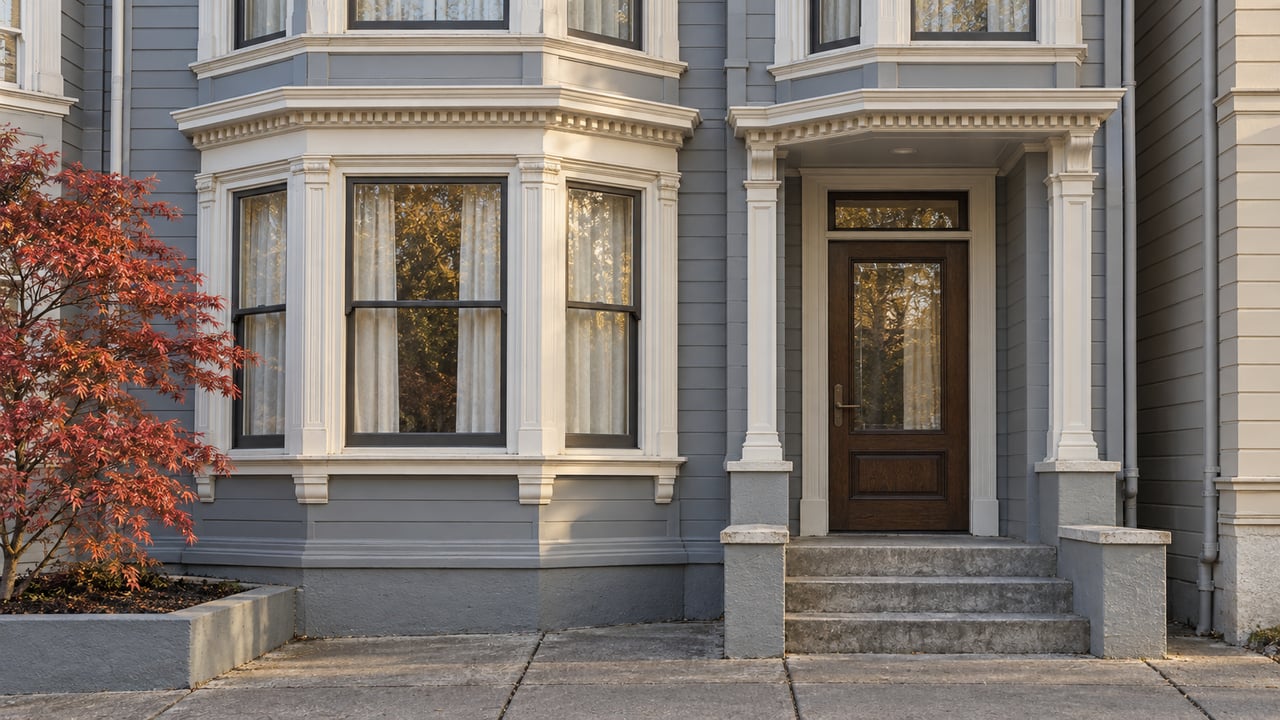
The building at Fillmore and Pine has changed restaurants before. It was Pacific Heights Bar & Grill for years, then Thai Stick, then Noosh, the Eastern Mediterranean spot that closed in 2019 after a legal dispute between its owner and chefs Laura and Sayat Ozyilmaz, who went on to open the acclaimed Dalida in the Presidio. The corner's history reflects the changing restaurant landscape along this stretch.
Junsoo and Hyunyoung Bae, the husband-and-wife team behind the Michelin-starred Ssal on upper Polk, are opening Monami in that same corner space this fall. The restaurant will run 3,500 square feet, seat 80 across two dining rooms plus two private rooms, and skip the all-you-can-eat format most Korean barbecue spots use in favor of a la carte and tasting menus built around premium Californian, Japanese, and Korean beef, seasonal seafood like Dungeness crab and raw marinated spot prawns, and banchan made fresh. AvroKO, the design firm behind China Live, handled the interior.
"I want it to be a Korean barbecue version of House of Prime Rib," Bae told the San Francisco Chronicle.
Getting there required emptying the building's second floor. In late April, every upstairs tenant at 2001 Fillmore received a letter giving them roughly five weeks to vacate so construction could begin June 1. Some of those tenants had been there for over a decade.
Three Blocks North, a Second Michelin Name
Between Clay and Sacramento Streets, the former Starbucks at 2222 Fillmore, in continuous operation as a coffee shop since 1990, is becoming a restaurant from Pim Techamuanvivit, the chef behind the Michelin-starred Kin Khao and Nari. Working title: Khao Soi Ya, likely a permanent version of the khao soi pop-up she ran on Nari's mezzanine in 2024, centered on the Thai curry noodle soup.
That address sits inside the same two-block stretch as the Clay Theater and 2001 Fillmore.
The Same Buyer, Eight Buildings Later
The name behind both addresses is Neil Mehta, a venture capitalist and founder of Greenoaks Capital whose portfolio includes early investments in Stripe and Rippling. Mehta grew up in Pacific Heights, still lives there, and has described his purchases on Fillmore as personal rather than purely financial. Since 2023, entities connected to him have acquired eight properties along a three-block run of the street, an effort he calls the Upper Fillmore Revitalization Project.
The most recent purchase closed in August 2026: $8.6 million for the building at 2035-2047 Fillmore, previously home to Aquatalia, A-Pizza, and Mio, empty since 2022. Built in 1926 in the Mediterranean Revival style with leaded glass transom windows and rope-molded Corinthian columns, the building is now the subject of a historic landmark review. In June, the Board of Supervisors extended the Historic Preservation Commission's deadline to evaluate that designation by 90 days, a delay that could complicate whatever Mehta's team wants to do with the space next. Reporting from The New Fillmore indicates the vacant storefronts are expected to be combined into a single restaurant, following the same pattern as 2001 and 2222 Fillmore.
Here is what the corridor looks like right now, address by address:
| Address | Former tenant | What's happening |
|---|---|---|
| 2001 Fillmore | Noosh | Monami, Korean steakhouse, opening fall 2026 |
| 2222 Fillmore | Starbucks | Khao Soi Ya, Thai restaurant in planning |
| 2035-2047 Fillmore | Aquatalia, A-Pizza, Mio | Acquired August 2026, landmark review pending |
| 2261 Fillmore | Clay Theater | Restoration approved, targeting early 2027 reopening |
| 2235 Fillmore | Ten-Ichi | Vacant since 2024 |
How Restaurant Changes Affect Existing Tenants
The project also affected people who were renting space in the building before it began. Petsche, a hairstylist who moved his chair into 2001 Fillmore in 2012 after years working elsewhere on the street, told The New Fillmore he has close to 25 years in the neighborhood. Laura Brown, an acupuncturist whose Radiant Moon Medicine occupied an office in the same building for more than 12 years, told The New Fillmore that the upstairs community was "a sanctuary." Both had days to plan their next move once the letter arrived.
Outcomes differed for long-standing businesses. La Mediterranee, open on Fillmore for 45 years, negotiated a lease extension with Mehta's team and remains open. Three blocks away, the former Ten-Ichi sushi restaurant, a 46-year fixture, closed. After facing eviction, the restaurant posted publicly that it had asked to keep operating until a new tenant was found and was refused. The storefront has sat empty for more than two years.
The Clay Theater Restoration
The Clay Theater restoration is another part of the project. Closed since 2020, the single-screen movie house at 2261 Fillmore cleared its biggest hurdle on April 1, 2026, when San Francisco's Historic Preservation Commission unanimously approved plans to restore it.
The restoration's timeline and related project milestones:
- Mehta's team acquires the shuttered Clay along with several neighboring buildings starting in 2023.
- In March 2026, restoration plans go before the commission's architectural review committee.
- On April 1, 2026, the full commission votes unanimously to approve the project.
- A Mehta-linked fund, Friends of Fillmore LP, raises $50 million the same week.
- Reopening is targeted for early 2027, per Mehta's team.
The plan preserves the theater's landmarked neon marquee and facade while rebuilding the interior around a 200-seat auditorium, new seating, and an expanded concession area that will operate as an all-day cafe rather than only during showtimes. The corner space next door, once home to an Alice + Olivia boutique, is slated to become a full-service restaurant serving breakfast through dinner. Even commissioners who have pushed back on other parts of the project praised the stakeholder engagement on this piece specifically.
What You'll Actually See Walking Fillmore This Fall
Not everything changing hands on Fillmore traces back to Mehta. Super Duper Burgers opened its 20th location at 1701 Fillmore in July, taking over a former Burger King at the corner of Post, a straightforward franchise expansion unconnected to the revitalization project. Jonathan Adler closed his home furnishings store at 2133 Fillmore this year, and Rocksbox shuttered its jewelry shop at 2208 Fillmore less than two years after opening there permanently. Meanwhile Sue Fisher King, after 46 years as a fixture on Sacramento Street, chose to relocate her boutique to Fillmore, a sign the address still pulls retailers even amid the churn.
The Fillmore Jazz Festival tells a parallel story about who is underwriting the neighborhood's public life these days. The 2025 event nearly didn't happen after organizers faced a roughly $400,000 funding gap, and entrepreneur Chris Larsen's nonprofit Avenue Greenlight provided support days before cancellation. The 2026 festival returned bigger, with stages named for Miles Davis, John Coltrane, Tony Bennett, and Johnny Mathis, and more than 25 performers.
Walk the three blocks between Clay and Pine this month and you will see scaffolding at 2001 Fillmore, a still-dark marquee at the Clay, papered windows at 2222 and at the newly purchased 2035-2047 block, and an empty storefront at 2235. Together, the restaurant openings and building changes mark a visible shift along that stretch of Fillmore.
If you're curious how a corridor this concentrated in private investment tends to shape property values on the surrounding blocks, that's a conversation worth having with someone who tracks Fillmore Street closely. Eric Turner has spent more than three decades in this city watching corners like this one turn over, and can walk you through what it means for a home nearby. Get your instant home valuation to see where things stand today.