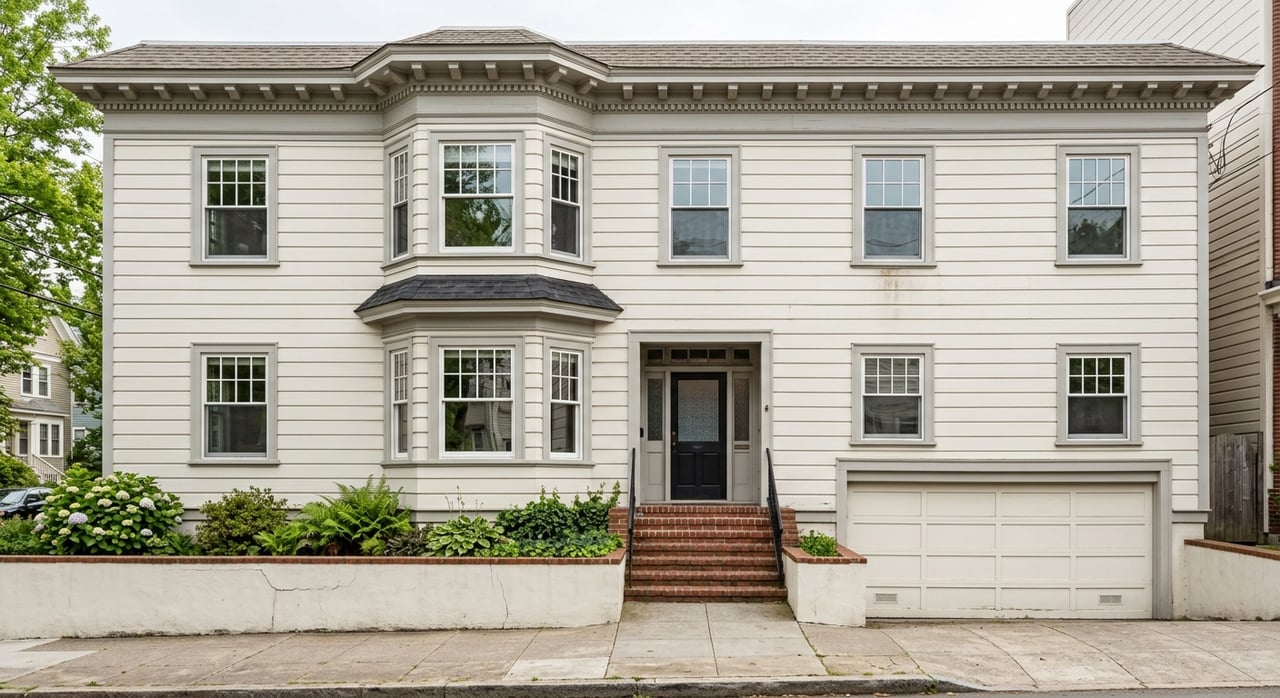
Trying to choose between a Marina condo and a house? In one of San Francisco’s most recognizable waterfront neighborhoods, that decision can shape your budget, your day-to-day routine, and how much control you have over your property. If you are weighing lifestyle, cost, and long-term ownership tradeoffs, a clear side-by-side view can save you time and second-guessing. Let’s break it down.
Marina prices start with a wide gap
In the Marina, condos and houses usually sit in very different price brackets. Recent neighborhood snapshots put the Marina District around $2.9 million median sale price in May 2026, with homes averaging 12 days on market, though an earlier three-month view ending April 2026 showed $2.6 million.
When you look at current listings by property type, the gap becomes more concrete. Zillow showed 2 active Marina condo listings with a median asking price of $1.25 million. Current Marina house listings included homes priced at $2.678 million, $3.25 million, and $7 million.
Recent sales show the same pattern. A Marina condo at 3044 Franklin St #102 sold for $950,000, while single-family homes at 349 Marina Blvd and 669 Marina Blvd sold for $5.7 million and $6.15 million. If your first priority is lowering the entry price, condos usually open the door to Marina ownership at a much lower starting point.
Condo costs go beyond the price tag
A lower purchase price does not always mean a lower monthly carrying cost than expected. In Marina condos, HOA dues can be a meaningful part of your monthly budget.
Current condo examples in the neighborhood show HOA dues of $984 per month and $1,556 per month. A recent sale at 3044 Franklin St #102 had $435 per month in dues. For broader context, Axios reported the San Francisco metro median HOA fee was $502 per month in 2025, up from $360 in 2019.
Property taxes also matter. San Francisco’s secured property tax rate for fiscal year 2025-26 is 1.18268325%, and a change in ownership can trigger a supplemental assessment. At that rate, a $1.25 million condo works out to about $1,232 per month in property taxes before HOA dues.
Using the current Marina condo examples, that means a condo’s non-mortgage carrying cost is roughly $2,216 to $2,788 per month once taxes and HOA dues are combined. That is an important number to compare against a house, especially if you are deciding based on monthly payment comfort rather than just down payment.
Houses bring higher taxes and direct upkeep
A Marina house usually comes with a much higher purchase price, and that flows straight into your tax bill. At the same San Francisco tax rate, a $3.25 million house carries about $3,203 per month in property tax before insurance and maintenance.
Unlike a condo, a house typically does not spread exterior building costs across a homeowners association. You are more likely to handle upkeep directly, whether that means roofing, exterior paint, drainage, windows, or landscaping. That can mean more control, but it also means more planning and more variability in your annual costs.
This is one of the clearest tradeoffs in Marina ownership. A condo often shifts some maintenance into a predictable monthly fee, while a house gives you autonomy but places more responsibility on you.
HOA rules shape condo ownership
In California, condominium ownership is generally tied to HOA membership. The California Attorney General notes that HOA members generally must pay fees and assessments, and the Davis-Stirling Act covers elections, finances, maintenance responsibilities, and dispute resolution.
That legal structure affects what you own and what the association manages. The California Department of Real Estate explains that condominium common area is owned or controlled by the HOA, and spaces like balconies, patios, porches, windows, and some parking spaces may be treated as exclusive-use common area rather than fully private land.
In practical terms, that means you should not assume a balcony, patio, or parking space works the same way it would with a house. The HOA board also typically handles budgets, insurance, common-area maintenance, and reserve funding. Under California law, special assessments are also possible.
Outdoor space feels different in each option
If outdoor space is high on your list, the ownership experience can look very different between condos and houses. Marina condos may offer outdoor space, but it is often smaller in scale or shared in some form.
For example, 3044 Franklin St #102 included a private balcony, a shared garden-facing setting, a shared backyard, and one parking space. That may work well if you want some outdoor access without the full responsibility of maintaining a yard.
Marina houses can offer more expansive private outdoor areas tied to the lot itself. 349 Marina Blvd sold on a 3,110 square foot lot with a backyard, while 669 Marina Blvd sold on a 4,944 square foot lot with a large backyard and a two-car garage. Another home at 655 Marina Blvd included a private garden, two south-facing decks, and a two-car tandem garage.
If you picture weekend entertaining, gardening, or simply having more separation from neighbors, a house usually offers more flexibility. If you want lower-maintenance outdoor access, a condo may still check the box.
Parking can be simpler with a house
Parking is another area where the condo-versus-house distinction matters. In many single-family homes, the garage, driveway, and lot are part of one ownership package.
In condo buildings, the setup can be more complicated. San Francisco Building Inspection guidance states that in structures with 10 or more dwelling units, accessory parking spaces must be leased or sold separately from the unit price.
That local rule helps explain why condo buyers sometimes see parking treated as a separate line item. If parking is essential to your routine, confirm whether it is included, separately deeded, leased, or assigned through the HOA.
Marina’s walkability changes the equation
The Marina is a place where neighborhood access can offset some ownership compromises. Redfin labels the area supremely walkable with a Walk Score of 94.
That can matter if you are deciding how much private parking or outdoor space you really need. Buyers who expect to walk to errands, dining, the waterfront, or nearby open space may be more comfortable with a condo layout and fewer bundled amenities.
At the same time, walkability does not eliminate personal preference. If you want a private garage, larger lot, or more storage, the convenience of the neighborhood may not outweigh the appeal of a house.
Which option fits your lifestyle?
For many buyers, the right answer comes down to how you want to live, not just what you can afford. A Marina condo often makes sense if you want a lower entry price, less direct exterior maintenance, and a more lock-and-leave ownership style.
The tradeoff is that you will likely have HOA dues, shared decision-making, and less direct control over building systems and common areas. You may also need to look more closely at how outdoor space and parking are structured.
A Marina house often makes sense if you want more privacy, more outdoor space, more parking, and more autonomy. The tradeoff is the much higher purchase price and the fact that upkeep is more direct and less shared.
The California Department of Real Estate notes that detached homes are generally more marketable than attached homes and tend to command higher sale values. That lines up with the current Marina price spread.
A smart comparison checklist
Before choosing between a condo and a house in the Marina, compare the full ownership picture, not just the list price.
Review these condo items
- HOA dues
- HOA budget and reserve funding
- Recent or pending special assessments
- What the monthly dues cover
- Parking arrangement
- Whether outdoor space is deeded, exclusive-use, or shared
- HOA documents, including rules and responsibilities
Review these house items
- Lot size
- Garage configuration
- Private outdoor space
- Major systems work already completed
- Ongoing maintenance needs
- Whether the property is part of any HOA or common-interest development
Even detached homes can have HOA dues in some planned developments or other common-interest developments. If a house appears standalone, it is still worth verifying whether an HOA exists.
Making the Marina decision with confidence
The Marina does not offer a one-size-fits-all answer. A condo can be the more efficient path into the neighborhood, while a house can offer a very different level of privacy, space, and control.
If you compare list price, monthly carrying costs, ownership structure, and daily lifestyle needs side by side, the right option usually becomes clearer. In a market where the price spread is wide and inventory can move quickly, that clarity is a real advantage.
If you want help weighing Marina condos against houses based on your budget, priorities, and timing, connect with Eric Turner for clear, local guidance.
FAQs
What is the main cost difference between Marina condos and houses?
- Marina condos usually have a lower purchase price, but you should add HOA dues and property taxes to your monthly budget. Marina houses usually cost much more upfront and carry higher property taxes, plus direct maintenance costs.
Do Marina condos usually have HOA fees?
- Yes. In California, condominium ownership is generally tied to HOA membership, fees, and association rules.
Can a Marina condo include outdoor space?
- Yes. A Marina condo can include features like a balcony, patio, or shared yard, but those spaces are often structured as exclusive-use common area or shared common area rather than fully private land.
Do Marina houses always come without HOA dues?
- No. Some detached homes are part of planned developments or other common-interest developments, so you should verify whether an HOA exists even for a standalone house.
Is parking handled differently in Marina condos?
- Often, yes. In some San Francisco condo buildings with 10 or more dwelling units, accessory parking spaces must be leased or sold separately from the unit price.
How walkable is the Marina for buyers choosing between a condo and a house?
- The Marina is considered highly walkable, with a Walk Score of 94. That can make some buyers more comfortable with less parking or smaller private outdoor space, depending on their routine.