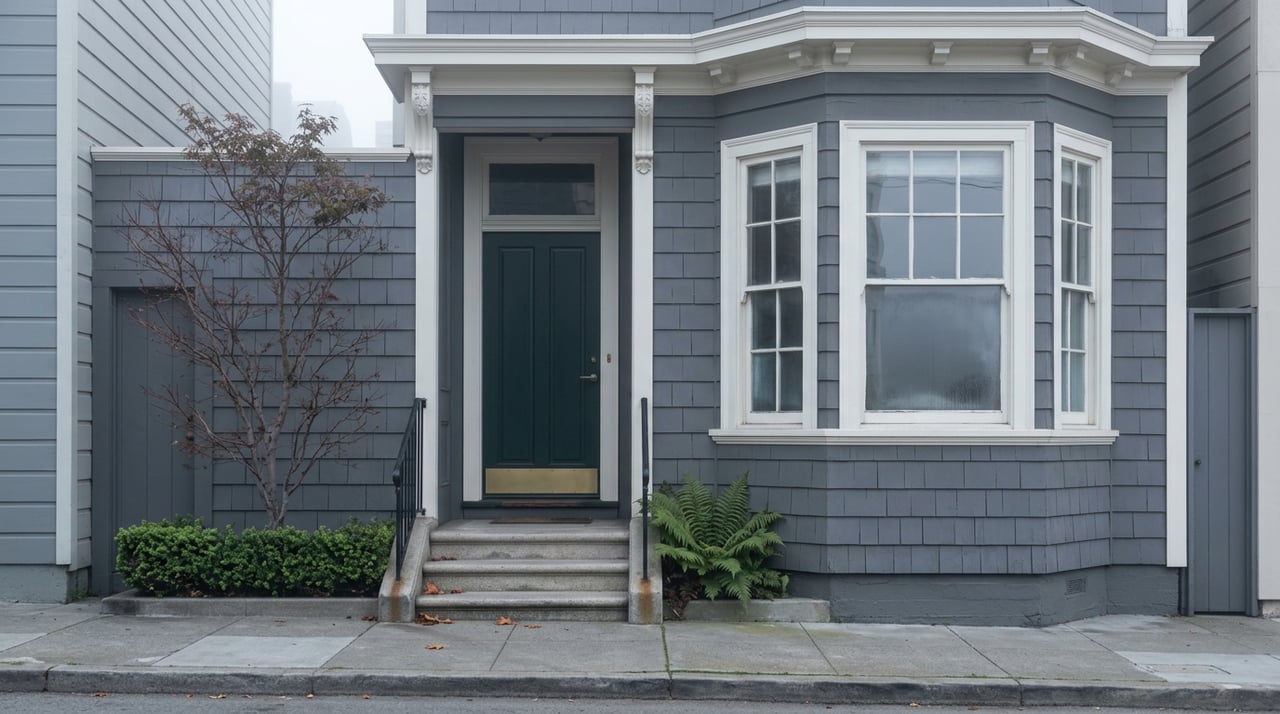
Walk the three blocks of Cole Street on a weekday morning and you will pass a dark storefront with butcher paper taped over the glass, right where a Peet's Coffee used to pour drip coffee for commuters catching the N-Judah at Carl and Cole. That empty window is not a symbol of decline. It is the opposite. A chef is preparing to fill it with a counter serving about 30 kinds of fresh pasta, and the community fundraising campaign for the buildout says more about how this neighborhood works than any median price ever could.
Cole Valley is the smallest neighborhood in San Francisco, wedged between Golden Gate Park, Haight-Ashbury, the Castro, and the base of Twin Peaks near Tank Hill. Its entire commercial life runs through three blocks of Cole Street and a short stretch of Carl, a footprint so tight that a single restaurant closing or opening changes the character of the whole strip. That compactness is the reason this month's news is worth more than the usual roundup of openings and events. On a three-block street, you can actually watch the mechanism.
A Three-Block Neighborhood Doesn't Hide Its Bets
The intersection of Carl and Cole has been the center of this district since the streetcar first stopped there in 1928, and the N-Judah still stops there today. Everything that matters commercially in Cole Valley radiates out from that single corner. When a national chain pulls out of a storefront here, there is no second commercial district to absorb the loss and no way to disguise a vacancy behind a bigger block of retail. The neighborhood either fills the space with something that fits its scale, or the gap sits there for everyone to notice.
That is exactly what happened this month, and exactly why the replacement tenant matters.
A Coffee Chain Left. A Pasta Counter Is Seeking Community Funding.
Anthony Strong, the chef behind Pasta Supply Co., announced in a video posted to the company's Instagram that he is opening a third San Francisco location at 919 Cole Street, in the roughly 700-square-foot space the Peet's Coffee left behind. The new shop is expected to open in October, and Strong has designed it around the size of the room rather than around a bigger ambition than the block can hold: a counter-service model with about 24 seats, serving lunch and dinner daily, offering roughly 30 varieties of fresh pasta along with sauces, olive oil, and other cooking staples. Filled pastas and sauces will arrive daily from the company's Mission District production facility, which means the Cole Street counter itself will mostly boil pasta and heat sauce rather than run a full production kitchen.
The financing is the part worth sitting with. Strong is funding the buildout through a crowdsourcing campaign run directly through Pasta Supply Co. rather than a third-party platform, with a goal of raising $400,000 and rewards that include pasta subscriptions. That works out to more than $570 for every square foot of a space that used to sell coffee by the cup. This is not investor capital or a bank line calculated against citywide restaurant trends. It is a chef asking the people who already eat in this neighborhood to fund the next thing they will eat in this neighborhood, a financing model that only makes sense on a block small enough that the operator already knows his customers by name.
The Strip Already Around It
Pasta Supply Co. is not walking into empty territory. The existing three blocks already carry more than a dozen restaurants and cafes, and the mix is instructive:
- Zazie, an institutional French bistro known for brunch, still anchoring the strip's old guard
- Bambino's Ristorante, a charming old-school Italian spot
- InoVino, a wine bar built around solid pastas, already doing a version of what Strong is betting on
- Cole Valley Tavern, the neighborhood's go-to bar and restaurant at Cole and Carl, known for smashburgers and a loyal regular crowd
- Beit Rima, a second, quieter outpost of a restaurant popular enough to expand
- Finnegans Wake and Kezar Pub, the strip's two bars with room for groups
- Lovely's, a smashburger counter sharing space with Woods
That density of independent, owner-driven food and drink is the context for the pasta counter's arrival. This is not a strip courting a national tenant to fill a gap. It is a strip where a departing chain gets replaced by another local operator willing to put skin in the game.
Built to Manufacture Foot Traffic
The same merchants who benefit from that density are not waiting passively for it to show up. The Cole Valley Merchants Association, working with Sunset Mercantile, Civic Joy Fund, and Avenue Greenlight, runs Cole Valley Nights, a recurring evening market that shuts down Cole Street between Carl and Parnassus for food, live music, and local vendors. The next one lands this Thursday, August 20, from 4 to 9 p.m., themed as a State Fair.
These events are not just a nice night out. When the market returned this spring, Axios reported that hundreds of attendees packed Cole Street for food ranging from tamales to Nepali momos, alongside two live music stages. Sarah Winter, a Cole Valley resident and artist who sells illustrations of the city's streetscapes, told Axios she has vended at the market four times and said the exposure has been meaningful, adding "it's been amazing... I rely on the market quite a lot." Axios reported the event has contributed to roughly a fifth of her overall sales. For a three-block commercial strip, a market that can move the needle that much for even one small vendor is not incidental programming. It is deliberate infrastructure for foot traffic.
The To-Go Cup Is New Too
The mechanics behind the market changed recently as well. San Francisco's Entertainment Zone designation, which allows patrons to carry to-go alcoholic drinks from participating bars and restaurants within a defined area, has been extended to cover Cole Valley. That means during Cole Valley Nights, visitors can now walk Cole Street with a drink purchased from Cole Valley Tavern or Finnegans Wake rather than staying tied to a single patio. It is a small regulatory change, but on a strip this size it directly extends how far a customer's evening, and their spending, travels down the block.
Transit Work Along the Same Corridor
None of this is happening in ideal conditions. The N-Judah, which stops at Carl and Cole, is the busiest line in the entire Muni Metro system, carrying an average of 38,600 weekday riders as of June 2026. SFMTA's N Judah Transit and Safety Project is currently delivering upgrades along the line's on-street segment, work that touches the same corridor where the merchants association is trying to keep people walking and eating. Residents who already navigate crowded platforms at Carl and Cole are living with construction on top of that congestion while the neighborhood simultaneously tries to draw more foot traffic to the same sidewalks.
That overlap is worth understanding this month. Cole Valley's merchants are not simply hoping the neighborhood holds steady. They are actively building reasons to walk Cole Street, seeking to help finance a new business through community fundraising and staging markets that measurably help small vendors, while transit work proceeds along the same corridor.
The Read for August
If you live here, the calendar is straightforward. Cole Valley Nights runs this Thursday, August 20, from 4 to 9 p.m. on Cole Street between Carl and Parnassus, with a State Fair theme and to-go drinks now allowed under the extended Entertainment Zone. Pasta Supply Co. is targeting an October opening at 919 Cole, with a neighborhood crowdfunding campaign seeking to fund the buildout rather than outside capital. And the N-Judah work along Carl and Cole will keep shaping how easy it is to get to any of it. On a strip this small, all three of those facts are really one story: a neighborhood rallying around itself in real time, in full view of anyone walking down Cole Street to see it.
If you are weighing what any of this means for your own Cole Valley home, from a shifting commercial strip to the kind of buyer or renter it is starting to attract, that is the sort of on-the-ground read Eric Turner tracks block by block across San Francisco. Reach out anytime for a straightforward, no-pressure look at what your property is worth in today's market.
This article is general information, not legal, tax or financial advice. Consult a qualified professional about your situation.